MacBook Air 15 M5 2026 Review
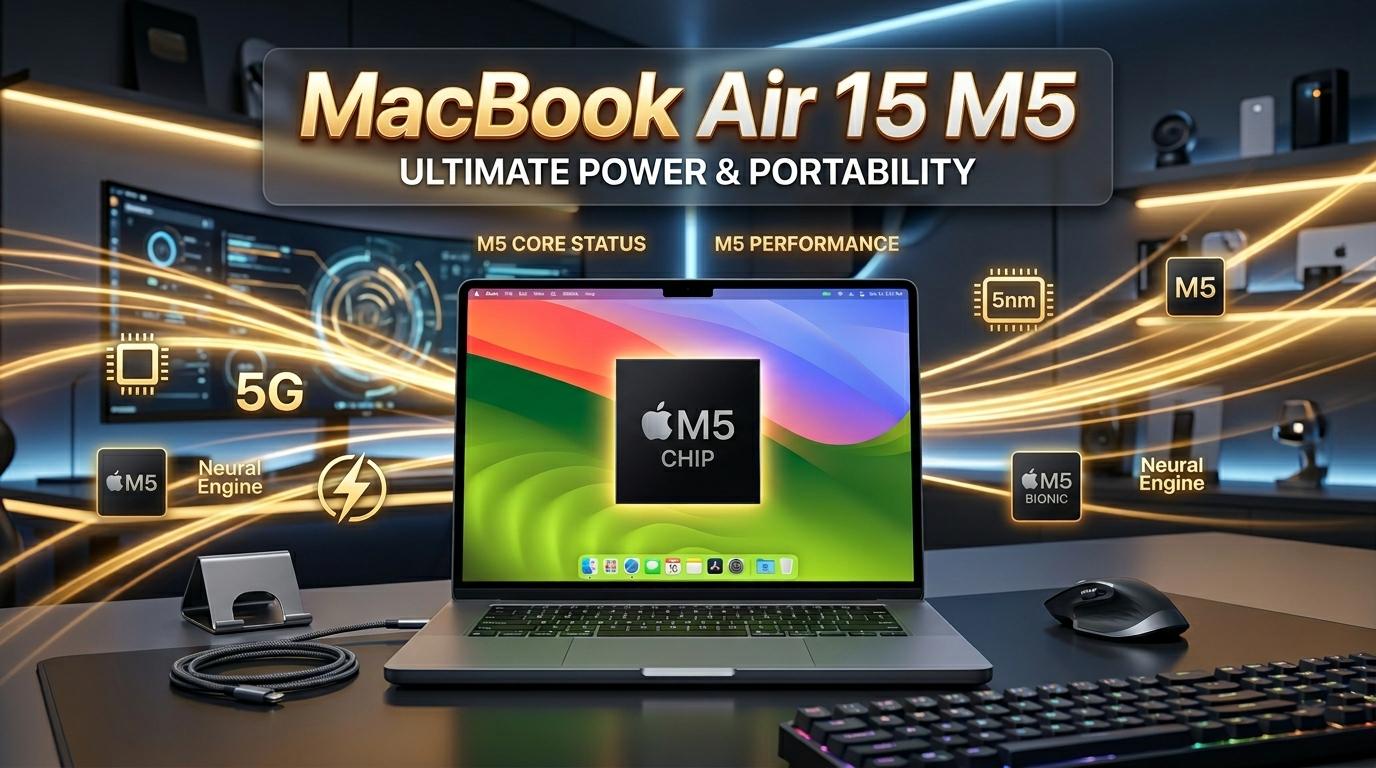
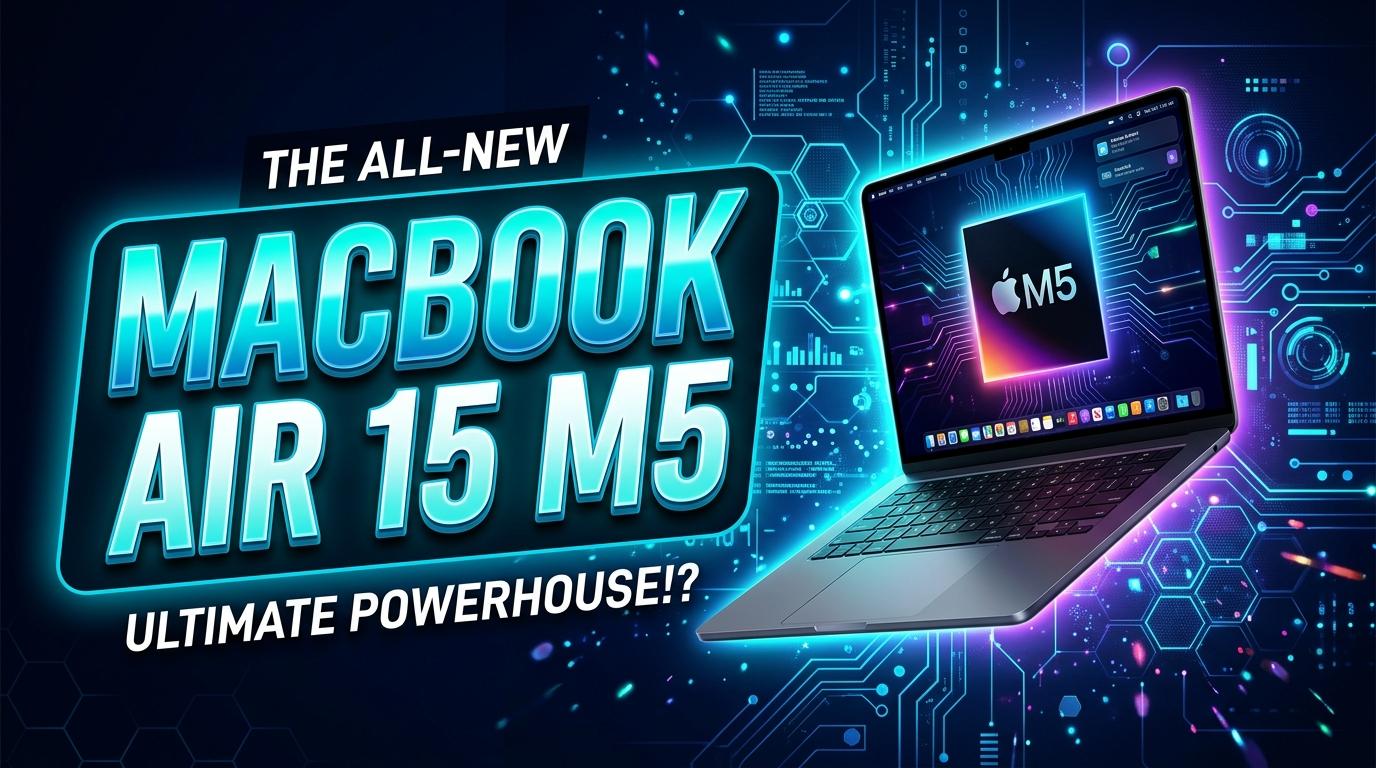
In 2026, Apple released the MacBook Air 15 M5 in new form factor and with important upgrades that resolve troubling areas of base storage and memory. For anyone already on the fence about using the Air with the larger screen for work, study or day-to-day scenarios, this model makes more sense than it has ever done before.
In this in-depth review we’ll detail the MacBook Air 15 M5 specs, real-world performance, battery life, how it stacks up against the 13-inch version, the current price and whether it’s actually worth it in 2026.
MacBook Air 15 M5 Key Specifications
| Feature | Specification |
|---|---|
| Chip | Apple M5 (10-core CPU: 4 performance + 6 efficiency cores, 10-core GPU) |
| Unified Memory | 16GB base (configurable to 24GB or 32GB) |
| Storage | 512GB SSD base (higher options available) |
| Display | 15.3-inch Liquid Retina, 2880 × 1864 resolution, 500 nits, P3 wide color |
| Battery Life | Up to 18 hours video streaming, ~15 hours web browsing |
| Weight | Approximately 3.3 lbs (1.51 kg) |
| Ports | 2× Thunderbolt 4 / USB4, MagSafe 3, 3.5mm headphone jack |
| Camera | 12MP Center Stage camera |
| Connectivity | Wi-Fi 7, Bluetooth 6 |
| Colors | Sky Blue, Silver, Starlight, Midnight |
| Starting Price (US) | $1,299 for base 16GB/512GB model |
Design and Display: Still the Gold Standard for Portability
The MacBook Air 15 M5 retains the ultra-thin, fanless aluminum chassis that made the Air line famous. It’s still below 0.4 inches thick, making it one the thinnest 15-inch laptops money can buy.
It’s a decent Liquid Retina display at 15.3 inches for the price. Colors pop, the text is crisp, and brightness is more than sufficient for use indoors, and outdoors. The large screen real estate really comes in to play if you are multitasking, watching movies or working with multiple windows alongside.
Typing on a laptop is a key part for anyone who spends longer hours on it, the 15-inch variant comes with an extended screen size that reduces eye fatigue when compared to the 13-inch.
Performance: M5 Chip Delivers Smooth Everyday Power
The M5 is a fantastic achievement when it comes to efficiency and graphics. Other than that, the single-core speed really shines for fast app launches and responsive feel, while the 10-core GPU can handle photo editing, light video work, and even some light cannibalism without missing a beat.
As the MacBook Air is still fan-less, it remains silent even under pressure. There will be zero fan noise — ever.
The M5 Air provides plenty of horsepower for the vast majority of users — students, office workers, content creators performing mundane tasks, or professionals who require stability. MacBook Pro lineup will still be the go-to option for heavy video editors or 3D designers.
Battery Life: All-Day (and Then Some) Performance
MacBook Air 15 M5 battery — probably the strongest point of it. Real-world usage sees almost all users making it through a full workday + some evening use on a single charge.
Web->12–15+ hours for Document work is possible
Video Streaming – Almost 18 Hours As Advertised
Medium productivity: Lasts all day from morning to night without a need for the charger
It certainly helps compared to the smaller 13-inch model, the 15-inch one has a larger battery. Most people leave the charger at home or in the office now.
MacBook Air 15 M5 vs 13-Inch: Which Size Should You Choose?
This is one of the questions people are usually interested about.
Choose the 15-inch MacBook Air M5 if you
- More screen space for productivity and media
- You might working on large document with multiple apps open
- You consume a ton of videos or perform low-hanging creative tasks
- Desire a desktop like experience in a portable body
Choose the 13-inch version if:
- You want a device with maximum portability
- You travel a lot and take the laptop in a small bag
- Service and support — Most settle quickly, comprising things like web browsing, email as well as light files
- There is very little performance or battery difference between the two sizes. Ultimately it really depends on how big of a screen you want and how you carry your laptop.
Pricing and Value in 2026
In the US, the base 16GB/512GB MacBook Air 15 M5 will start from $1,299. More memory or storage configurations cost more, but the base model is now actually satisfactory for many people.
Pricing and availability is subject to regional and retailer differences. You can generally find a repeat discount in many markets, via education pricing or trade-in, that brings the effective cost down further. The new base specs are also better, so you shouldn’t feel pressured to upgrade to each the pricier upgrades immediately.
Who Should Buy the MacBook Air 15 M5?
- University students in need of a dependable notebook to take notes, do research, and join online lessons
- Tacky Dark Office Neutral: Especially demeanour & salary, Money & expense accounted up until October 2023
- Here’s the CliffNotes version: Anyone who wants a screen larger than a laptop, but doesn’t want to lug around a heavy machine.
- For those upgrading from older Intel or earlier M-series Macs
Essentially, if you perform 4K video editing on a regular basis, run heavy software for your job, or need more than one high-powered external display, the MacBook Pro will offer a better usability in the long run.
Final Verdict: Is the MacBook Air M5 15-Inch Worth Buying in 2026?
Yes — but only for the bulk of consumers just in 2026, it seems to us.
That, coupled with the larger screens, improved base specs (16GB memory + 512GB storage), brilliant battery life and completely silent operation makes it one of the best everyday laptops you can buy today. The only thing I was disappointed with is the fact that Apple finally addressed the biggest complaint with previous base models.
For those who prioritize portability with a large, vibrant screen and do not need a powerhouse, this is one of the best recommendations in Apple’s laptop range at the moment. MacBook Air 15 M5 There is an amazing balance of performance, portability and price for the majority of students, professionals and general users.